


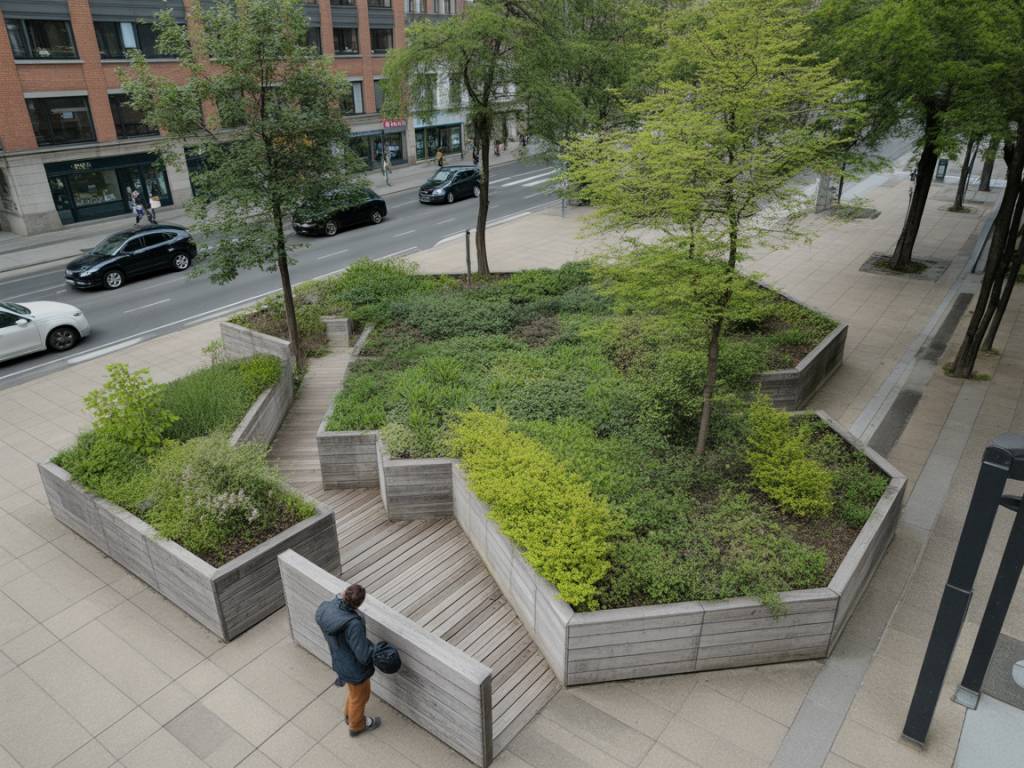
What Urban Pocket Forests Are and Why They Matter
Urban pocket forests are small, densely planted patches of native trees, shrubs, and groundcover created within cities to restore some of the ecological functions of a much larger woodland. Sometimes called mini forests, micro-forests, or tiny forests, they can occupy surprisingly little land: a roadside verge, a vacant lot, the edge of a parking area, a schoolyard, or the corner of a public park. Despite their modest size, these spaces can deliver measurable environmental and social benefits in dense urban areas where land is scarce and heat, pollution, and habitat loss are persistent problems.
The idea is rooted in urban rewilding, a broader movement that seeks to reintroduce nature into highly built environments. Rather than treating green space as decorative landscaping alone, urban pocket forests are designed as living ecosystems. They prioritize ecological function over ornamental neatness, often using native species planted closely together so the canopy, understory, and forest floor can develop quickly. This dense planting approach helps the site mature faster than a conventional park planting scheme and can accelerate gains in shade, biodiversity, and soil health.
For cities facing rising temperatures and more intense weather, pocket forests are increasingly seen as practical nature-based solutions. They are relatively low-cost compared with large infrastructure projects, they can be installed on underused land, and they can strengthen public space in neighborhoods that have historically lacked access to trees and nature.
How Pocket Forests Help Cool the Urban Heat Island
One of the most widely discussed benefits of urban pocket forests is their ability to reduce the urban heat island effect. Cities tend to be warmer than surrounding rural areas because buildings, roads, and other hard surfaces absorb and retain heat. Tree cover is one of the most effective tools for lowering local temperatures, and even small forests can make a difference through shade and evapotranspiration, the process by which plants release moisture into the air.
Compared with isolated street trees, a compact forest patch can create a more substantial microclimate. Dense foliage intercepts sunlight, the layered structure of vegetation slows wind and traps cooler air near the ground, and soil protected by leaf litter retains more moisture. In hot summers, these effects can improve comfort for pedestrians, cyclists, children, and older adults who are especially vulnerable to extreme heat.
Research on urban greening consistently shows that canopy cover can lower surface and air temperatures, improve thermal comfort, and reduce energy demand in nearby buildings. While a pocket forest will not cool an entire district on its own, a network of small forested spaces distributed across a city can help soften hot spots and create cooler corridors in places where people walk, wait, or gather.
For urban planners, this is significant because climate adaptation increasingly depends on solutions that work at multiple scales. Pocket forests do not replace larger parks, but they can complement them by targeting heat-vulnerable blocks, schoolyards, transit stops, and neighborhoods with limited tree canopy.
Biodiversity Gains from Small-Scale Rewilding
Urban pocket forests can act as microhabitats in landscapes that are often fragmented and biologically simplified. By using native trees, shrubs, grasses, and pollinator-friendly plants, these sites can support insects, birds, fungi, and small mammals that struggle to survive in heavily manicured urban green space. The ecological value comes not only from planting trees but from creating structural diversity: multiple layers of vegetation, dead wood where appropriate, leaf litter, and soil conditions that encourage a more complex food web.
In many cities, biodiversity decline is driven by habitat fragmentation. Pocket forests help address this problem by acting as stepping stones between larger parks, river corridors, cemeteries, school grounds, and street tree networks. Even a small habitat patch can support pollinators and migratory birds if it provides food, cover, and nesting opportunities. Over time, these spaces can become part of a broader urban ecological network.
Species selection matters. Native species are typically preferred because they have co-evolved with local insects and birds and therefore tend to support more life than ornamental exotics. In temperate regions, a pocket forest may include canopy trees, understory trees, shrubs that produce berries or flowers, and ground-layer species that stabilize soil and suppress weeds. In Mediterranean, subtropical, or arid climates, the mix will differ, but the principle remains the same: use locally adapted plants that can thrive with minimal irrigation once established.
These forests are also valuable for urban biodiversity education. Residents often notice birds returning, butterflies visiting, and seasonal changes becoming more visible. That everyday encounter with nature can strengthen public support for ecological restoration and build a stronger culture of urban stewardship.
Improving Public Space Through Better Design and Ecological Function
Urban pocket forests do more than provide environmental services. They can also improve the quality of public space. In many cities, leftover land is treated as residual space: fenced-off lots, neglected corners, or sterile buffers between roads and buildings. Pocket forests can transform these areas into places with identity, shade, texture, and seasonal interest.
Well-designed rewilded spaces can make walking routes more pleasant and help neighborhoods feel less harsh and more livable. A small forest patch near a bus stop can offer relief from sun and noise. A pocket forest in a schoolyard can create a learning landscape. In a housing estate, it can provide residents with a visual and sensory break from concrete and asphalt. These improvements matter because public space is not only about movement and function; it is also about comfort, dignity, and access to nature.
There is also a public health dimension. Access to green space has been linked to lower stress, more physical activity, and improved mental well-being. When pocket forests are placed close to homes, they can extend the benefits of green infrastructure into neighborhoods where larger parks may be too far away to use regularly. For children, the presence of a small forest can encourage play, curiosity, and ecological learning. For older residents, shade and seating nearby can increase the usability of outdoor spaces during warmer months.
From Vacant Lot to Living Ecosystem
Creating an urban pocket forest usually starts with site preparation. Urban soils are often compacted, contaminated, or low in organic matter, so the first step may be to assess soil conditions and determine whether remediation is needed. Designers may add compost, mulch, or clean topsoil, or in some cases use raised planting beds if contamination is severe. Drainage and water retention are also important, especially in cities where stormwater runoff can overwhelm local infrastructure.
Many pocket forests are established using a dense planting method inspired by natural succession. Young saplings are planted close together to encourage vertical growth and competition, which can help them establish faster and reduce weed pressure. The initial maintenance phase is critical: watering, mulching, protecting from vandalism or grazing, and replacing failed plants. After a few years, the canopy begins to close, the understory develops, and maintenance demands can decrease significantly.
This makes pocket forests especially attractive for municipalities and community groups with limited budgets. Once established, they can require less mowing and less irrigation than conventional lawns. That does not mean they are maintenance-free, but their upkeep is often more ecological and less resource-intensive than ornamental planting schemes that depend on frequent trimming, fertilizers, and seasonal replanting.
Community Participation and Local Stewardship
Successful urban rewilding projects often depend on strong community involvement. Residents, schools, local nonprofits, and city agencies may all play a role in planning, planting, and long-term care. Participation matters because pocket forests are embedded in everyday life. If nearby residents understand the project and feel some ownership over it, the space is more likely to be protected and valued.
Community engagement can also shape the design itself. Different neighborhoods have different needs and priorities: shade near a playground, habitat for pollinators, flood mitigation in a low-lying area, or a quieter public space on a busy street. Involving local people early helps ensure that the pocket forest is not imposed from above but built around shared goals.
Educational programming can strengthen that relationship. Tree-planting days, school science projects, biodiversity monitoring, and seasonal cleanups can turn a small forest into an outdoor classroom. Residents who learn to identify native species, watch for nesting birds, or record insect visits are more likely to see the space as part of the neighborhood’s living infrastructure.
At the same time, planners need to be careful about equity. Green improvements can sometimes contribute to rising property values and displacement if they are not paired with broader housing and affordability protections. For that reason, urban pocket forests should be part of inclusive planning strategies that keep public benefits accessible to existing residents.
Economic and Policy Relevance for Cities
From an economic perspective, urban pocket forests can be attractive because they deliver multiple benefits from a relatively small footprint. They combine climate adaptation, stormwater management, biodiversity support, and public realm improvement in one intervention. For cities working with constrained budgets, this kind of multi-functional infrastructure is increasingly valuable.
Local governments are beginning to recognize that nature-based solutions can reduce long-term costs associated with heat stress, drainage overload, and public health burdens. While the exact return on investment depends on local conditions, pocket forests can be deployed incrementally, allowing municipalities to test sites, refine maintenance models, and expand successful projects over time. They can also help cities meet broader sustainability goals, including climate resilience, tree canopy targets, and biodiversity action plans.
Policy support is often needed to make these projects scalable. That may include simplifying access to vacant public land, funding pilot programs, integrating pocket forests into school greening initiatives, and aligning them with transport, stormwater, and public health strategies. When urban forestry, parks departments, and climate offices work together, pocket forests can move from experimental projects to standard urban design tools.
What Makes a Pocket Forest Successful Over Time
The long-term success of an urban pocket forest depends on a few practical factors. Site selection must account for sunlight, soil, drainage, safety, and local use patterns. Planting designs should favor native and climate-resilient species suited to the city’s conditions. Early maintenance must be planned, funded, and assigned clearly. And the project needs a governance model, whether municipal, community-led, or shared, that ensures the site is cared for after the initial planting event.
Monitoring is also important. Cities and researchers can track canopy growth, temperature changes, soil improvement, pollinator activity, bird sightings, and public use. These indicators help demonstrate whether the pocket forest is meeting its ecological and social goals. They also build evidence for future investments in urban rewilding and green infrastructure.
As more cities search for ways to cool neighborhoods, support urban biodiversity, and improve public space without waiting for large-scale redevelopment, pocket forests stand out as a practical and visible strategy. They show that even very small pieces of land can be reimagined as living systems with public value. In dense urban environments, that shift in thinking may be as important as the trees themselves.