


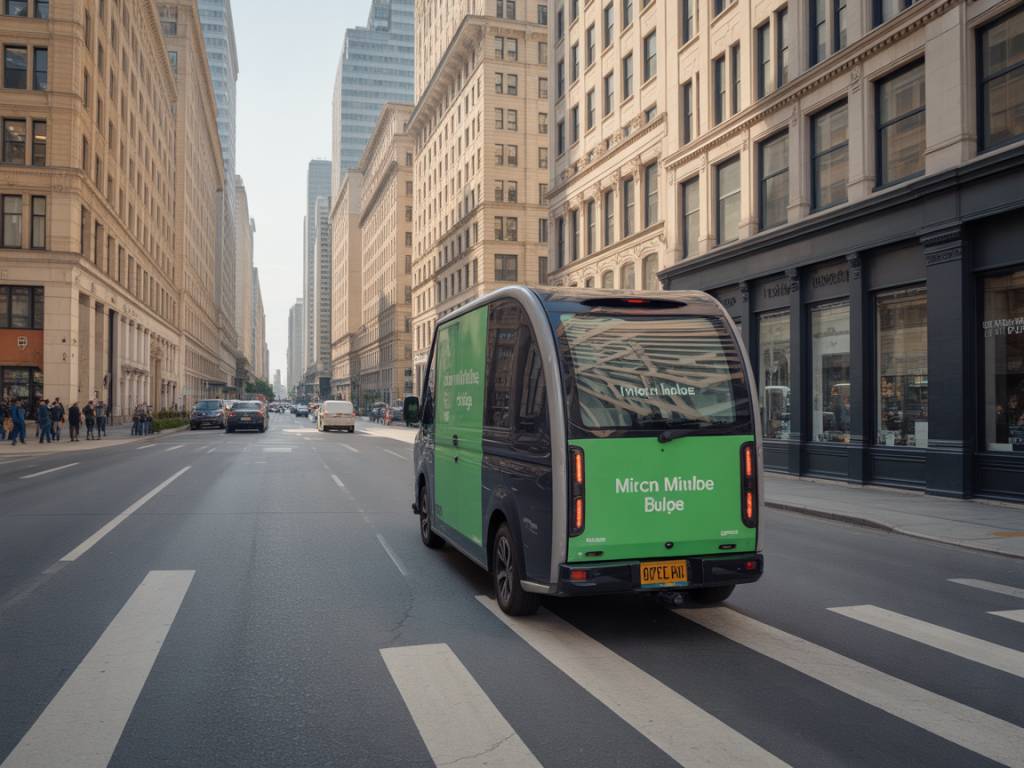
As e-commerce volumes surge and same-day delivery becomes the norm, cities are struggling with a growing side effect: more vans, more congestion, and more emissions in already dense urban cores. In response, a new model is emerging at the intersection of urban logistics, sustainable mobility and commercial real estate: urban micro-hubs.
These small-scale logistics nodes, strategically located close to consumers, promise to transform last-mile delivery. By enabling cleaner vehicles, shorter routes and better use of scarce street space, micro-hubs are becoming a key tool for cities seeking greener, less congested streets.
What Are Urban Micro-Hubs?
Urban micro-hubs are compact logistics facilities embedded within the city fabric, typically located within a few kilometres of final customers. They serve as intermediate transfer points between larger distribution centers at the city edge and the doorstep of households or businesses.
Rather than big trucks traveling deep into city centers, goods are dropped at micro-hubs using larger, more efficient vehicles. From there, they are consolidated and dispatched for last-mile delivery using smaller, low-emission modes such as cargo bikes, e-vans, walking couriers or even autonomous robots in experimental pilot projects.
Common types of urban micro-hubs include:
- Dedicated urban logistics centers in ground floors or small warehouses.
- Temporary or modular hubs using containers, pop-up structures or converted parking spaces.
- Shared or multi-tenant hubs used by several carriers, retailers or platforms to pool deliveries.
- Hybrid hubs combining logistics with other functions such as retail, storage, parcel lockers or repair services.
In all cases, the goal is the same: to shorten and rationalize the last mile, making urban delivery more efficient, less polluting and less intrusive for residents.
Why Last-Mile Delivery Is a Growing Urban Problem
Last-mile delivery is the most visible and costly segment of the logistics chain. Various studies estimate that the last mile can represent up to 40–50% of total logistics costs, and a disproportionate share of CO2 emissions and street-level congestion.
Several structural trends are putting pressure on cities:
- Explosive growth of e-commerce: More frequent, smaller orders create fragmented delivery patterns.
- Rising expectations for fast delivery: Same-day and next-day services generate repetitive rounds and partial loads.
- Dense, mixed-use neighborhoods: Limited loading space, narrow streets and sensitive residential environments make delivery operations more disruptive.
- Regulatory pressure on emissions: Low-emission zones and congestion charges are pushing operators to rethink their urban footprint.
Without new models, the number of delivery vehicles circulating in cities is set to increase sharply, aggravating air pollution, noise, double parking and conflicts with pedestrians and cyclists. Urban micro-hubs are presented as a way to decouple the growth of online shopping from the growth of vans in city centers.
How Urban Micro-Hubs Transform Last-Mile Delivery
The logistics logic behind micro-hubs is straightforward: break down long, inefficient routes into a two-stage system that matches the right vehicle to the right distance.
In practice, the model often looks like this:
- Large trucks or full e-vans deliver bulk shipments to micro-hubs at off-peak times.
- Packages are sorted, consolidated and grouped by neighborhood or building.
- Last-mile rounds are carried out using smaller, low-emission vehicles such as cargo bikes or compact e-vans.
- Returns, reverse logistics and local stock replenishment are also managed from the hub.
This shift offers several operational advantages for urban logistics:
- Shorter routes in the densest parts of the city, reducing vehicle-kilometres traveled.
- Higher drop density per route, since deliveries are grouped by micro-zone.
- Better adaptation to urban constraints such as pedestrian streets, bike lanes and restricted access zones.
- Easier electrification, because charging infrastructure can be concentrated at the hub and routes are predictable.
For logistics operators, micro-hubs can improve reliability and resilience in congested environments. For cities, they can turn fragmented delivery flows into something more compatible with sustainable urban mobility.
Environmental and Social Benefits for Cities
Urban micro-hubs are attracting attention not only from logistics companies, but also from city planners and environmental agencies. When properly designed, they can contribute to a broad set of urban policy goals.
Key expected benefits include:
- Lower CO2 emissions: Replacing diesel vans with electric cargo bikes or e-vans on the last mile can cut greenhouse gas emissions significantly.
- Reduced air pollution and noise: Small electric vehicles emit virtually no local pollutants and produce less noise, especially early in the morning or late at night.
- Less traffic congestion: Fewer large vans circulating in central districts means less double parking, fewer blocked bike lanes and smoother traffic flow.
- Improved road safety: Smaller, slower vehicles reduce the severity of accidents, aligning with Vision Zero and road safety strategies.
- Better public space management: Concentrating loading and unloading around micro-hubs can free up curb space and sidewalks for pedestrians, cycling and outdoor activities.
From a social perspective, micro-hubs also open paths to new types of urban jobs and services. Local delivery staff can operate from neighborhood facilities, and hubs can host additional functions such as repair workshops, parcel pick-up points or circular economy activities like re-use and recycling.
Real Estate and Planning: Finding Space for Micro-Hubs
One of the biggest challenges in deploying urban micro-hubs is simply: where to put them? In dense cities, logistics and warehousing have historically been pushed out to peripheral industrial zones, making last-mile delivery longer and more complex.
The emergence of micro-hubs forces city planners and property owners to reconsider the role of ground floors, basements and underused spaces. Potential locations include:
- Vacant retail premises in high streets or shopping centers.
- Underutilized parking garages, especially as car ownership declines.
- Ground floors of office or residential buildings designed for flexible use.
- Municipal plots, depots or former industrial sites repurposed for urban logistics.
- Temporarily vacant land awaiting development, used for modular or container-based hubs.
This shift is contributing to a broader debate on “logistics real estate” in central urban areas. For landlords, micro-hubs can represent a new class of tenant with long-term demand. For cities, they require adapted zoning regulations, noise rules and design guidelines to integrate logistics functions into mixed-use neighborhoods.
Micro-Hubs and the Transition to Low-Emission Zones
Many European and global cities are introducing low-emission zones (LEZ) or zero-emission zones (ZEZ) that restrict the circulation of older or diesel-powered vehicles. Urban micro-hubs align closely with these policies, acting as gateways between the conventional logistics network and clean last-mile fleets.
Possible regulatory and governance tools include:
- Designated logistics zones where micro-hubs are encouraged, with simplified permits and dedicated loading bays.
- Incentives for electric vehicles such as grants, tax advantages or priority access for operators linked to micro-hubs.
- Public-private partnerships where city authorities provide space or infrastructure in exchange for environmental commitments.
- Shared or neutral hubs managed by third parties, allowing multiple carriers to collaborate and reduce empty runs.
For policymakers, the combination of micro-hubs and low-emission fleets offers a tangible pathway to decarbonize urban freight while maintaining – and often improving – service levels for businesses and residents.
Economic Viability and Operational Challenges
Despite their potential, urban micro-hubs are not a silver bullet. Their economic model depends on a delicate balance between operating costs, real estate prices, delivery volumes and regulatory frameworks.
Key challenges that cities and operators must address include:
- Real estate costs: Central locations are expensive, and logistics uses must compete with retail, offices and housing.
- Scale and density: Micro-hubs need a sufficient concentration of deliveries in a limited radius to remain viable.
- Coordination between actors: Retailers, carriers, platforms and city authorities must align on standards, data sharing and operational rules.
- Labor conditions: The rise of gig work in last-mile delivery raises questions about job quality, safety and social protection.
- Citizen acceptance: Residents may resist new logistics facilities in their neighborhood if design, noise or traffic impacts are not well managed.
Nonetheless, pilot projects in cities such as Paris, London, Berlin, New York and Singapore show that with the right partnerships and policy frameworks, urban micro-hubs can reach operational maturity. Many experiments start as small-scale or time-limited pilots, then evolve into permanent infrastructure once the model proves its value.
Designing Human-Scale, Neighborhood-Friendly Hubs
For micro-hubs to be widely accepted, they need to be more than technical logistics facilities. Their design and integration into the street environment matter as much as their operational efficiency.
Good practice approaches include:
- Architectural integration with active facades, transparent ground floors or mixed-use layouts that minimize the “back-of-house” feel.
- Shared use of space, combining logistics with bike parking, parcel lockers or local services to benefit residents.
- Noise and light management to protect neighbors, especially if operations occur early or late in the day.
- Safe interfaces with public space, with clear separation of delivery flows, pedestrian routes and cycling lanes.
- Data-driven monitoring of traffic, emissions and nuisance to adjust operations over time.
By treating micro-hubs as civic infrastructure rather than hidden technical sites, cities can ensure they contribute to liveable, walkable neighborhoods rather than undermining them.
The Next Frontier of Urban Logistics
Urban micro-hubs are part of a broader rethinking of urban logistics and last-mile delivery. They intersect with other innovations such as parcel lockers, pick-up and drop-off networks, crowdshipping, autonomous delivery robots and data-driven route optimization.
For city leaders looking to create greener, less congested cities, these compact logistics nodes offer a pragmatic tool: they work with the reality of rising e-commerce demand while steering it toward more sustainable practices. For logistics operators, micro-hubs represent a strategic adaptation to tighter environmental regulations and evolving customer expectations.
The pace of adoption will vary from city to city, depending on density, regulatory frameworks, real estate markets and political priorities. But as pressure grows to decarbonize transport and reclaim public space from vehicles, urban micro-hubs are likely to become a central component of how goods move through tomorrow’s cities.