Why Decentralized Energy Communities Matter for Cities
Across many cities, the traditional, centralized energy model is showing its limits. Heatwaves strain aging grids, storms trigger blackouts, and volatile gas prices ripple through household budgets. In this context, decentralized energy communities—local networks in which residents, businesses and public institutions co-produce, share and manage energy—are gaining attention as a pragmatic way to build a resilient, low-carbon urban future.
These urban energy communities are not only about installing rooftop solar panels. They combine local generation (solar, small wind, sometimes biomass or geothermal), storage (batteries, thermal storage), and smart control systems to optimize when and how energy is produced and used. They are often organized at the scale of a street, block, housing estate or neighborhood, and can connect to the main grid while retaining a degree of autonomy through microgrids and local trading mechanisms.
In economic terms, decentralized energy communities transform residents from passive consumers into “prosumers” who can generate revenue, reduce their exposure to energy price shocks and reinvest savings locally. In urban planning terms, they open new ways to align climate goals with social policy, housing regeneration and local economic development.
What Is a Decentralized Urban Energy Community?
A decentralized energy community is a group of users in a defined area that collaboratively manages energy production, consumption and sometimes distribution. In a dense urban context, this might be a cooperative of apartment dwellers sharing a solar array, a district-level heat network owned by residents, or a cluster of buildings linked through a neighborhood microgrid.
Typical features include:
- Local renewable generation: photovoltaic panels on roofs and façades, solar carports, small wind turbines where feasible, or shared heat pumps and district heating.
- Shared storage: neighborhood-scale batteries, vehicle-to-grid systems using parked electric vehicles, and thermal storage in hot water tanks or building materials.
- Smart distribution and control: building energy management systems, smart meters, and control software that balance supply and demand across the community.
- Collective governance: cooperatives, neighborhood associations or special purpose entities that allow residents and local stakeholders to decide how the system is operated and how benefits are shared.
- Flexible grid connection: the ability to operate in “island mode” during outages, while normally interacting with the main grid and local energy markets.
From a legal perspective, the shape of these communities depends heavily on national and municipal regulations: some are structured as energy cooperatives, others as public–private partnerships or social enterprises. But the core idea remains similar: decentralization of both technology and decision-making.
How Decentralized Energy Communities Enhance Urban Resilience
Resilience has become a central concern for cities exposed to climate risks, geopolitical tensions and infrastructure failures. Urban energy communities contribute to resilience in several ways.
First, they reduce dependence on distant supply chains. By generating a portion of their electricity and heat locally, neighborhoods become less vulnerable to disruptions in gas pipelines, power plants or long-distance transmission lines. During heatwaves, for example, local solar combined with battery storage can support cooling systems when central grids are under stress.
Second, they enable microgrid “islanding.” In a well-designed system, a neighborhood microgrid can temporarily disconnect from the larger grid and continue to function using on-site generation and storage. Critical loads—such as elevators, emergency lighting, refrigeration and communication equipment—can be prioritized, protecting vulnerable residents in high-rise buildings.
Third, they speed up recovery and adaptation. When residents are directly involved in energy planning and management, they can pilot new technologies, adjust demand patterns and invest in upgrades much faster than large utilities typically can. Communities that have practiced demand response—reducing or shifting consumption during peak times—tend to be better prepared for emergency curtailments.
In this sense, decentralized energy communities act as an additional layer of safety in the urban fabric, complementing rather than replacing central grids.
Cutting Carbon Emissions at the Neighborhood Scale
Urban areas are responsible for a large share of global energy-related emissions. Buildings, transport and urban infrastructure all rely heavily on electricity and heat. Decentralized energy communities provide a practical way to advance decarbonization where people live and work.
The main levers are straightforward but powerful:
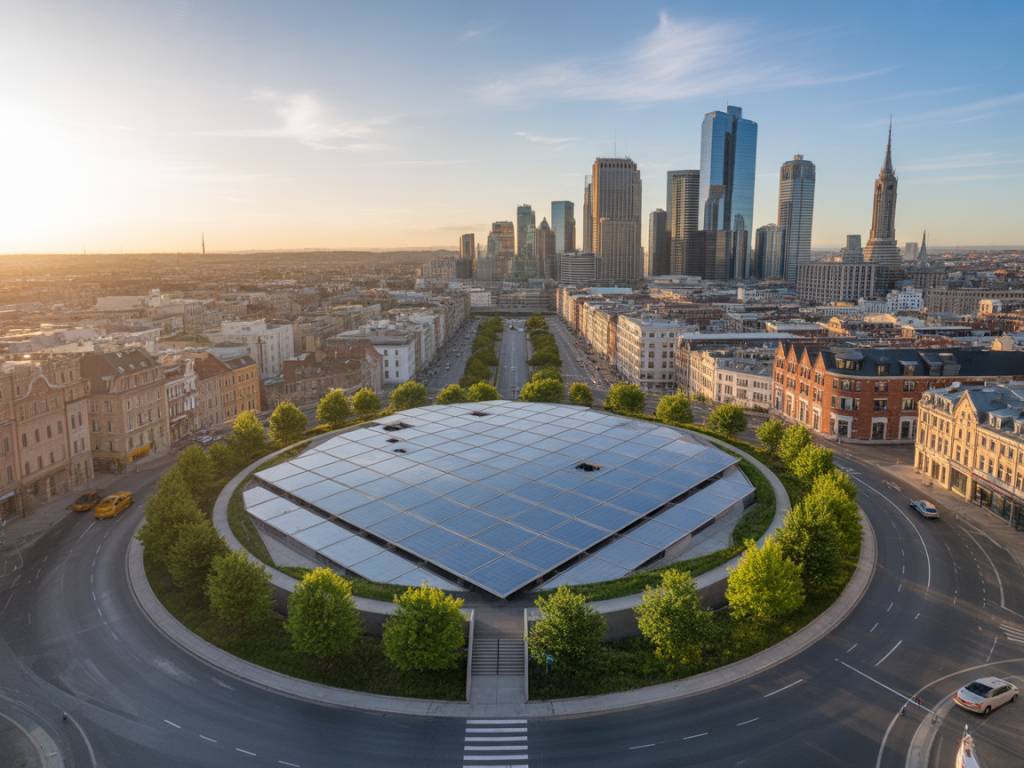
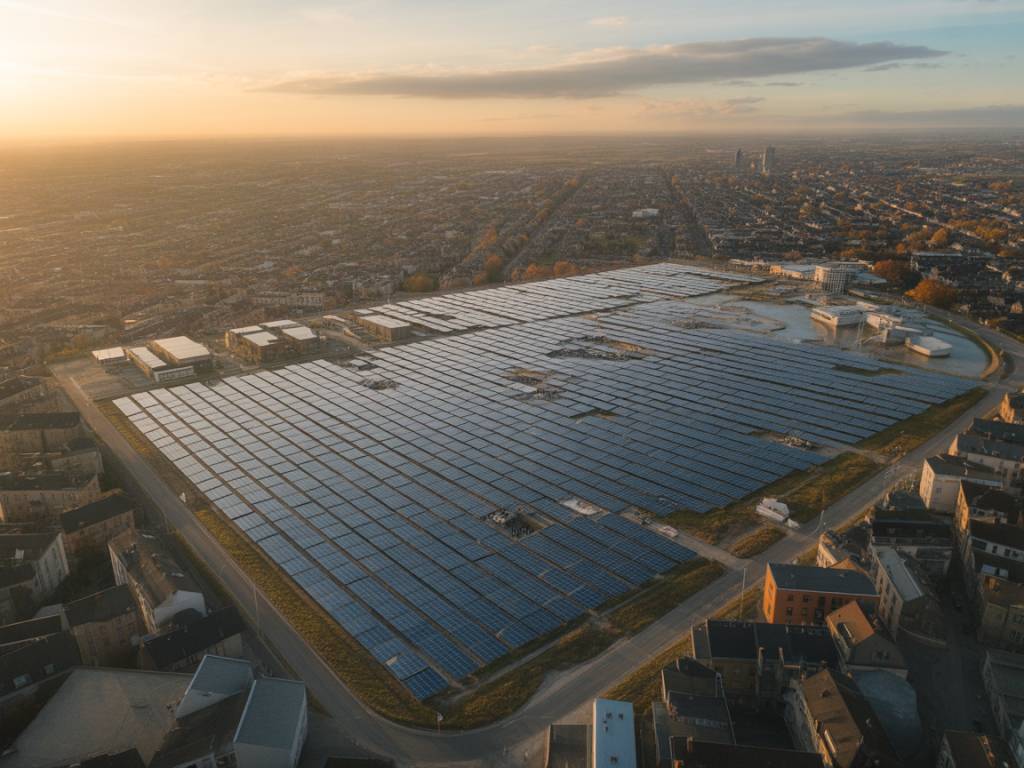
- High penetration of renewables on available surfaces: rooftops, façades, parking lots and brownfield sites are turned into energy assets.
- Electrification of heating and mobility through shared heat pumps, electric vehicle charging hubs and building retrofits.
- Energy efficiency improvements supported by real-time data on consumption patterns, enabling targeted retrofits and behavioral change.
- Load shifting and demand response, which maximize the use of local renewable generation by aligning consumption with production peaks.
Because these changes are implemented at the community level, they can be coordinated with local urban policies: zoning rules for solar access, incentives for green roofs, requirements for new developments to join or support local energy networks. This spatial and regulatory alignment is one reason why urban planners increasingly view decentralized energy communities as a key tool for achieving climate-neutral city strategies.
Economic Benefits for Urban Neighborhoods
Beyond environmental objectives, decentralized energy communities can generate tangible economic value in city neighborhoods. This value can be captured in several ways.
Lower and more stable energy bills. By producing power locally and sharing it within the community, households and small businesses can reduce their exposure to wholesale price spikes. Long-term power purchase agreements within the community provide predictability, which is especially important for lower-income residents.
Local investment and job creation. Planning, installing and maintaining decentralized energy infrastructure requires engineers, electricians, energy managers, data specialists and legal advisors. When communities insist on local or regional suppliers, part of the investment stays in the neighborhood or city, rather than flowing to distant shareholders.
New revenue streams. In jurisdictions that allow it, excess energy can be sold into local energy markets or fed back to the main grid. Communities might also provide services such as frequency regulation or capacity reserves, monetizing their flexibility. These revenues can be reinvested in building retrofits, public space improvements or social programs.
Asset value and reputation. Buildings that are part of a well-managed energy community can be more attractive to tenants and buyers, particularly as corporate occupants seek low-carbon office space. Over time, this can support higher occupancy rates and property values, which in turn reinforce the community’s financial base.
Governance: Co-Creating Energy at the Neighborhood Level
The technical potential of urban microgrids and renewable systems is well documented. The real challenge often lies in governance: who decides, who pays, and who benefits.
Effective decentralized energy communities tend to share some institutional characteristics:
- Inclusive decision-making: residents, landlords, local businesses, housing cooperatives and municipal representatives all have a voice, through assemblies, working groups or digital participation platforms.
- Transparent financial models: clear rules about investment shares, tariffs, revenue distribution and maintenance responsibilities are crucial to build trust.
- Professionalized operation: while participation is key, complex energy systems require technical expertise. Many communities contract dedicated energy service companies or create local utilities owned by members.
- Long-term vision: governance structures that can adapt over decades, revising rules as technologies, regulations and demographics evolve.
In dense cities with diverse populations, attention to social equity is particularly important. Without safeguards, higher-income households may be better positioned to invest in rooftop solar or battery systems. Energy communities that reserve shares for low-income residents, use cross-subsidies or partner with public housing authorities are more likely to deliver broad social benefits.
Digital Tools and Local Energy Markets
Digitalization is central to the operation of decentralized energy communities. Smart meters, sensors and data analytics enable fine-grained monitoring of consumption and production at building or even appliance level. On top of this infrastructure, different forms of local energy markets can emerge.
In a basic configuration, a neighborhood platform aggregates the production of solar panels and allocates it to community members according to pre-agreed rules. More advanced systems allow peer-to-peer energy trading, where households and businesses can buy and sell energy to each other in near real time, often using automated contracts.
These mechanisms are particularly valuable in urban settings with mixed uses—residential, retail, offices, industry—because they smooth out demand peaks and increase the self-consumption of local renewables. Offices might supply surplus midday solar power to nearby apartments, while evening residential demand can be partially met by storage assets owned by commercial buildings.
At a city scale, multiple energy communities can interact via platforms managed by municipal utilities, distribution system operators or specialized intermediaries. This layered architecture—local microgrids linked into a smarter macrogrid—allows for both decentralization and coordination.
Barriers and Policy Levers for Cities
Despite the growing interest in decentralized energy communities, their deployment in urban neighborhoods is still constrained by several obstacles.
Regulatory complexity remains a major barrier. In many countries, rules regarding who can sell electricity, how tariffs are set, and how network charges are allocated were designed for centralized systems. Updating these frameworks to recognize communities as legitimate market participants is essential.
Upfront capital costs are another challenge, especially in low-income areas or older building stock. Even if lifetime costs are lower, the initial investment in solar, storage and controls can be prohibitive without targeted financing tools, such as green loans, on-bill financing, or public guarantees.
Technical and spatial constraints are particularly acute in dense cities. Limited roof space, shading by tall buildings, heritage protections and fragmented ownership patterns all complicate the design of local energy systems. Innovative solutions—shared solar on public buildings, integrated façades, solar carports and use of brownfields—help, but require careful urban design.
Municipal governments have several levers to address these issues:
- Adjusting zoning and building codes to prioritize solar access, shared energy systems and district heating or cooling.
- Creating pilot zones with simplified procedures and tailored tariffs for energy communities.
- Offering technical assistance to neighborhood associations and housing cooperatives, building local capacity.
- Using public buildings as anchor assets in energy communities, demonstrating feasibility and securing baseline demand.
Embedding Energy Communities in Urban Planning
For decentralized energy communities to move from isolated pilot projects to a systemic feature of urban development, they need to be integrated into broader city planning frameworks.
One approach is to make local energy strategies a standard component of neighborhood regeneration programs. When districts undergo housing renovation, public space redesign or transport upgrades, planners can systematically assess opportunities for shared solar, district heating, or integrated mobility and charging hubs.
Another approach is to embed energy communities in new urban developments from the outset. Developers can be required or incentivized to design blocks and public spaces that maximize solar potential, accommodate future microgrids, and provide shared infrastructure for storage and electric mobility. Early coordination with utilities and regulators helps align private investment with public energy and climate objectives.
Crucially, the co-creation of these systems should not be limited to technical experts and developers. Participation processes that engage residents—through workshops, digital tools, school programs and local organizations—can build a sense of shared ownership that extends beyond energy into other aspects of neighborhood life.
Co-Creating a Low-Carbon Urban Future
Decentralized energy communities illustrate how the energy transition can be grounded in everyday urban life. By combining local renewable generation, smart technologies, inclusive governance and supportive public policy, they allow neighborhoods to actively shape their own low-carbon, resilient future.
For cities seeking to meet ambitious climate targets while addressing inequality and infrastructure vulnerability, the neighborhood scale is increasingly strategic. It is large enough to achieve economies of scale and complex enough to integrate diverse uses, yet small enough for direct participation and experimentation.
In the coming years, the most successful urban energy communities are likely to be those that move beyond a purely technical vision. The projects that endure will treat energy not only as a commodity but as a shared urban resource—one that can strengthen social ties, support local economies and make cities more capable of facing the uncertainties of the twenty-first century.