


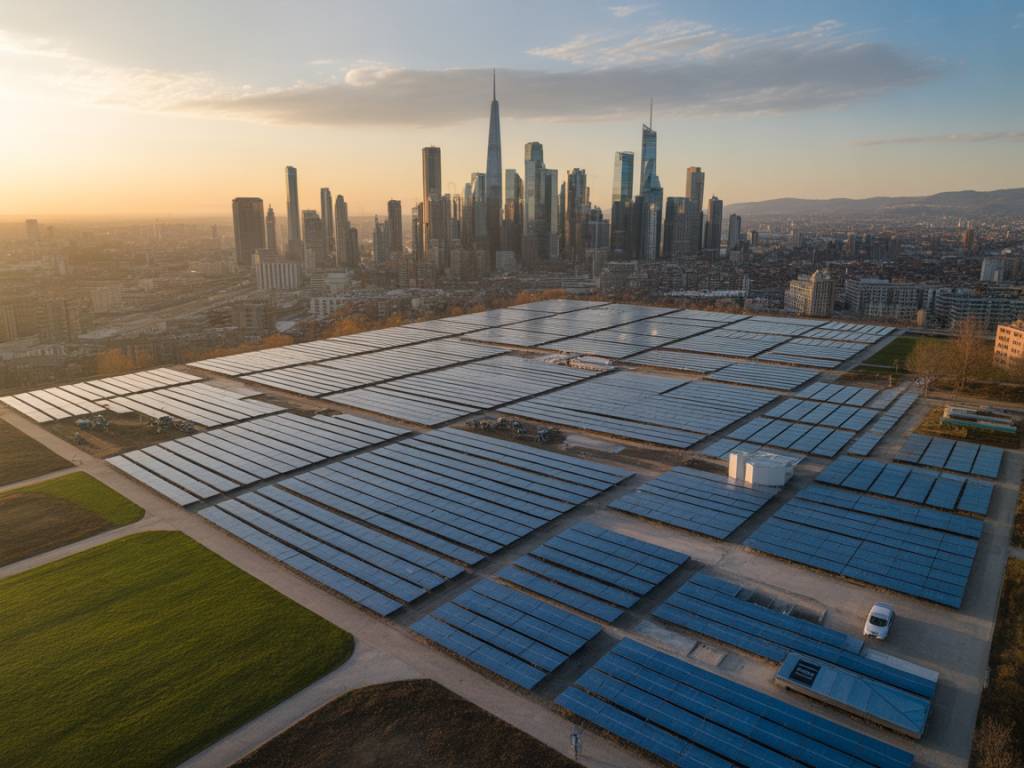
Across the world’s major metropolitan areas, a quiet transformation is underway. Cities once entirely dependent on centralized power plants and long-distance transmission lines are gradually embracing decentralized energy communities and local power grids. These new models of energy production and distribution promise to make urban areas more resilient, more sustainable and more democratically governed.
Decentralized energy communities, sometimes referred to as “local energy communities” or “energy cooperatives,” are groups of citizens, businesses and public institutions that collectively produce, share and manage energy at the neighborhood or district level. Enabled by renewable technologies, smart meters and digital platforms, they are beginning to reshape how sustainable cities are planned, financed and powered.
From Centralized Utilities to Local Power Grids
For over a century, the dominant model in urban energy systems has been centralized: large fossil fuel or nuclear power stations feeding electricity into a national grid, then distributed to passive consumers. This architecture optimized economies of scale but left cities exposed to systemic risks, infrastructure bottlenecks and price volatility.
In contrast, decentralized energy communities rely on a distributed energy model. Electricity is generated close to where it is used, often through solar panels on buildings, small wind turbines, geothermal systems or combined heat and power units. Local power grids, or microgrids, connect these assets within a defined geographic area, enabling communities to balance supply and demand locally and, in some cases, operate independently from the main grid during outages.
This shift is not merely technical; it reflects deeper economic and social changes. Cities are pursuing ambitious climate targets, residents are demanding more control over their energy bills and digital technologies are lowering the barriers to collective organization. As the costs of solar photovoltaics and battery storage continue to decline, decentralized energy communities are becoming an attractive pillar of sustainable urban development strategies.
What Is a Decentralized Energy Community?
Decentralized energy communities can take several forms, but they typically share a few defining characteristics:
In many European cities, for instance, residents join energy cooperatives that build and operate solar and wind installations. Members purchase shares, receive dividends from energy sales and participate in governance. In North America and parts of Asia, community solar projects allow renters and low-income households to subscribe to a share of a local solar farm, receiving credits on their electricity bills for the power generated.
Microgrids: The Technical Backbone of Local Energy
Microgrids are the technical infrastructure that make many decentralized energy communities possible. A microgrid is essentially a local power grid that can operate connected to or isolated from the main electricity network. It typically integrates multiple distributed energy resources—solar, wind, batteries, back-up generators—and manages them using advanced control systems.
In urban contexts, microgrids are emerging in a variety of settings: university campuses, industrial zones, hospital districts and mixed-use neighborhoods. They offer several advantages:
For city planners and policymakers, microgrids are increasingly seen as a key tool for resilient and sustainable urban infrastructure, particularly as climate change multiplies the risks of blackouts and heatwaves.
Economic Models Behind Local Energy Communities
Behind the technical architecture lies an evolving set of economic and governance models. Decentralized energy communities in sustainable cities often blend public, private and citizen ownership in innovative ways.
Common models include:
These models aim to democratize energy ownership, distribute economic benefits locally and align investment with climate objectives. However, they also raise questions about equity, regulation and the future role of conventional utilities.
Regulation, Policy and the Role of Cities
The growth of decentralized energy communities is tightly linked to regulatory frameworks. In many countries, electricity markets were designed around centralized utilities, with little room for small-scale producers or local trading. Adjusting these rules is crucial if cities want to scale up local power grids and community-based systems.
Forward-looking policies in support of decentralized energy communities often include:
City governments play a strategic role. While energy regulation is often national, municipalities control zoning, public land, building codes and procurement. By mandating rooftop solar on public buildings, facilitating shared energy infrastructure in new districts or partnering with cooperatives, cities can accelerate the development of decentralized energy communities and embed them in broader climate-neutral strategies.
Social Innovation and Energy Democracy
Beyond technology and regulation, decentralized energy communities are reshaping social relations in cities. The notion of “energy democracy” has gained prominence: the idea that citizens should have a say in how energy systems are governed and benefit from the economic value they generate.
Local power grids and energy communities can support this agenda by:
However, there is a risk that decentralized energy communities primarily benefit those with capital, technical skills or property ownership. Inclusive design—through targeted subsidies, social tariffs, shared ownership structures or public participation mechanisms—is essential if local power grids are to play a role in just and equitable sustainable cities.
Challenges and Barriers to Scaling
Despite their promise, decentralized energy communities face multiple challenges before they can move from pilot projects to mainstream urban systems.
Key barriers include:
Addressing these obstacles calls for collaboration between municipalities, utilities, regulators, technology providers and civil society organizations. Long-term planning and clear governance structures are essential to align local and national energy transition pathways.
Case Examples from Emerging Sustainable Cities
In Europe, several cities have built reputations as pioneers of decentralized energy. Municipal utilities and citizen cooperatives in places like Copenhagen, Vienna and parts of Germany have shown how district heating networks, local solar farms and community-owned wind can collectively power neighborhoods while cutting emissions.
In North America, urban microgrids are expanding in response to climate risks. Neighborhoods in New York and California are experimenting with resilient local power grids that combine solar, batteries and controllable loads to maintain critical services during wildfires or storms. Community organizations are closely involved in design and governance to ensure that resilience benefits extend beyond high-income districts.
In Asia, rapidly growing cities are exploring how decentralized systems can relieve pressure on overstretched grids and reduce air pollution. Pilot projects in dense urban districts show how apartment blocks, commercial buildings and transport hubs can share locally generated solar power, managed through sophisticated digital platforms.
How Local Power Grids Fit into the Future of Sustainable Cities
The rise of decentralized energy communities and local power grids does not mean that centralized systems will disappear. Large-scale generation, high-voltage transmission and national market coordination remain essential for reliability and cost-effectiveness. Instead, the future of sustainable cities is likely to be hybrid: a layered architecture in which local systems interact seamlessly with regional and national networks.
In this emerging model, neighborhoods manage a significant portion of their energy locally, optimizing timing, storage and efficiency with digital tools. The central grid provides backup, balancing and large-scale resources, while cities orchestrate the interface between local communities, utilities and regulators. Data plays a central role, turning energy systems into complex urban information networks.
For city leaders, planners and citizens, decentralized energy communities offer a tangible pathway to align climate goals with local economic development and social innovation. By rethinking who produces energy, where it is generated and how it is governed, sustainable cities are gradually redefining the power grid as a shared urban resource rather than a distant, invisible utility.