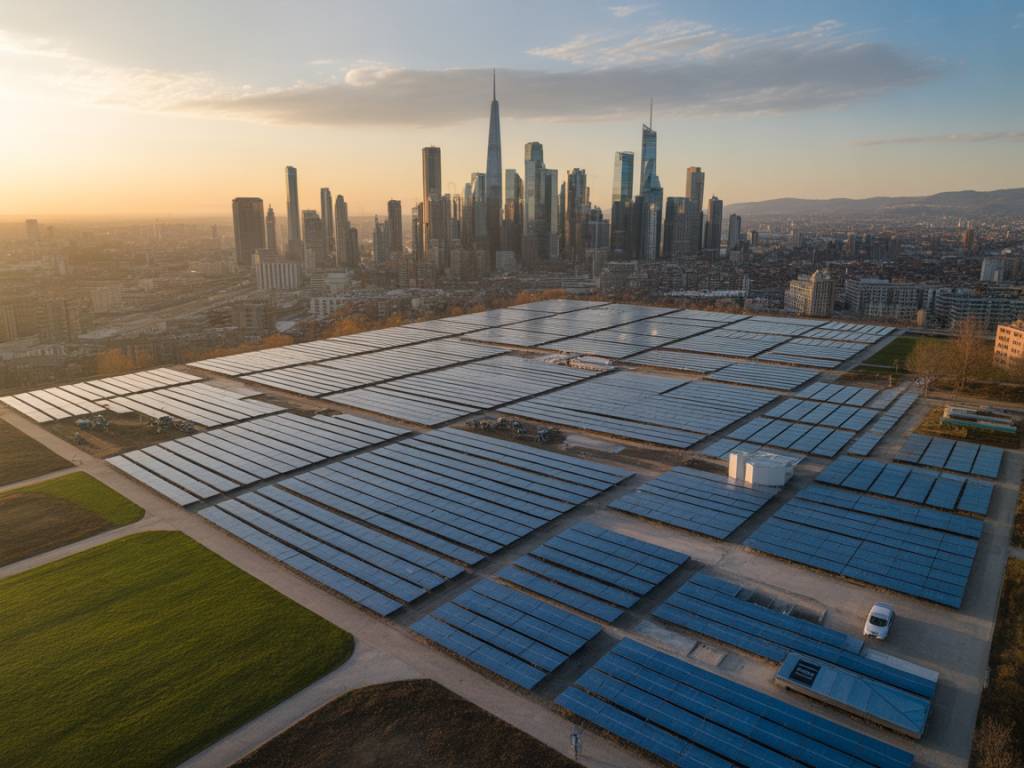

Across the world, cities are rethinking how they produce, distribute and consume energy. As climate targets tighten and extreme weather events become more frequent, urban governments and citizens are looking for ways to make local power systems cleaner, more resilient and more affordable. One of the most promising responses is the rise of urban energy communities built around local microgrids.
These neighbourhood-scale energy systems combine solar panels, battery storage, electric vehicles and smart controls to create flexible, low-carbon power networks. Instead of relying solely on large central power plants and long transmission lines, cities can tap into distributed, locally owned resources that keep the lights on even during grid disruptions.
What Are Urban Energy Communities?
Urban energy communities are groups of residents, businesses or public institutions that jointly plan, invest in and manage local energy resources. They can take many legal and organisational forms – cooperatives, homeowner associations, non-profit entities or public–private partnerships – but they share a core vision: treating energy as a shared local asset rather than a distant commodity.
Typical urban energy communities are anchored by technologies such as:
- Rooftop solar photovoltaic (PV) systems on apartments, offices and public buildings
- Community-scale battery storage installed in basements, parking structures or energy hubs
- Electric vehicle (EV) charging stations that can also serve as flexible storage
- Smart meters and digital platforms that enable real-time monitoring and control
- Heat pumps, district heating and cooling networks, and demand response equipment
What distinguishes an energy community from a simple collection of solar rooftops is governance and collaboration. Members make joint decisions about investments, tariffs, data sharing and the use of surplus electricity. In many European cities, for example, energy communities can legally produce, consume, store and sell renewable energy collectively, often benefiting from supportive regulation and targeted incentives.
Microgrids: The Technical Backbone of Local Power
Microgrids provide the technical infrastructure that allows energy communities to operate as semi-autonomous power systems. A microgrid is a defined electrical network that can operate either connected to the main grid or in “island mode”, independently supplying power to a specific area such as a neighbourhood, university campus or industrial district.
Local microgrids typically integrate a mix of:
- On-site renewables (solar, sometimes wind or biomass)
- Dispatchable backup generation (often gas or biofuel generators for critical loads)
- Battery energy storage systems to smooth fluctuations and provide backup
- Advanced control systems and software that balance supply and demand in real time
In an urban context, microgrids can be layered on top of existing distribution infrastructure. They use sensors, power electronics and control algorithms to manage flows of electricity within a defined boundary, while still interacting with the wider grid. During normal operations, microgrids exchange energy with the main system. During outages, they can disconnect and maintain power for local customers.
This combination of local generation, storage and intelligent control is what allows cities to build resilient, low-carbon energy systems that are tailored to neighbourhood needs.
Why Cities Are Turning to Local Microgrids
Several powerful drivers are pushing urban planners, utilities and citizens toward energy communities and microgrids.
Climate and decarbonisation goals. Cities account for a large share of global energy-related emissions, particularly from buildings and transport. Local microgrids make it easier to integrate a high share of distributed renewable energy into dense urban environments, helping municipalities reach net-zero carbon commitments.
Resilience to climate risks and grid disruptions. Heatwaves, storms, flooding and wildfires are putting unprecedented stress on energy infrastructure. Microgrids equipped with storage can maintain critical services – hospitals, emergency shelters, data centres, water treatment plants – when regional networks fail. For city leaders, resilience is now as important as efficiency.
Energy affordability and social equity. Urban energy communities can offer lower and more predictable energy costs, particularly in low-income neighbourhoods. By enabling local ownership of assets like solar panels and batteries, they allow residents to capture more of the value created by the energy transition and reduce exposure to volatile fossil fuel prices.
Digitalisation and smart city strategies. Many cities are investing in smart grids, sensor networks and data platforms to manage mobility, lighting, waste and air quality. Microgrids fit naturally into these strategies, offering a way to orchestrate thousands of small energy devices as part of an integrated urban system.
How Local Microgrids Work in Practice
At the neighbourhood level, a microgrid typically connects several buildings – residential blocks, offices, schools or commercial centres – through a local distribution network. Solar panels on roofs and facades feed energy into this shared infrastructure. Batteries store excess power when production exceeds consumption, then release it during peak demand or outages.
A central energy management system monitors generation, storage and demand across the microgrid. Using price signals, weather forecasts and historical consumption patterns, it decides in real time whether to:
- Use on-site renewable energy locally
- Charge or discharge batteries
- Import electricity from the main grid when prices are low
- Export surplus energy and provide services such as frequency regulation
- Temporarily reduce or shift non-essential loads (demand response)
Residents and businesses interact with this system through smart meters and digital interfaces. They might see dynamic tariffs that reward them for shifting consumption to periods of high local solar output or low wholesale prices. Some models distribute revenues from energy exports or grid services among members according to agreed rules.
During a grid outage, the microgrid disconnects and operates autonomously. It prioritises critical loads – refrigeration, medical equipment, elevators, communications – and uses stored energy to bridge periods without sunshine. In some pilots, electric vehicles can also feed power back to buildings in an emergency, further reinforcing resilience.
Economic and Environmental Benefits
From an economic standpoint, microgrids and urban energy communities can reduce peak demand charges, lower transmission and distribution losses, and avoid or defer costly grid upgrades. By generating energy close to where it is used, cities reduce the need for large new substations and high-voltage lines, especially in fast-growing districts.
At the household or business level, the combination of rooftop solar and shared storage can cut electricity bills and offer a hedge against future price spikes. While upfront investment costs remain significant, falling technology prices and new financing models – such as energy-as-a-service contracts, green bonds and cooperative ownership structures – are improving project viability.
Environmentally, local microgrids enable higher penetration of renewable energy in dense urban areas, where space is limited and grid constraints are common. They also support electrification of transport and heating by coordinating charging and heating loads to align with renewable output. Over time, this helps cities reduce air pollution and greenhouse gas emissions while improving urban air quality and public health.
Regulatory and Social Challenges
Despite their promise, urban energy communities and microgrids face several barriers.
Regulatory frameworks often lag behind technology. In many countries, rules were written for centralised utilities and do not clearly define the rights and responsibilities of local energy communities. Issues such as access to the distribution grid, tariff structures, data governance and the ability to trade peer-to-peer energy can be unclear or restrictive.
Financing and risk allocation are also complex. Microgrids require coordinated investment across generation, storage and control systems, sometimes involving multiple property owners and stakeholders. Lenders and investors may be wary of novel business models or uncertain revenue streams from ancillary services and flexibility markets.
On the social side, governance and inclusion matter. If energy communities are driven only by affluent early adopters, benefits risk being unevenly distributed. Designing transparent decision-making processes, ensuring representation of vulnerable groups and avoiding the creation of “green enclaves” in already-privileged districts are key concerns for equitable urban energy transitions.
Global Examples and Emerging Models
Several cities provide early illustrations of what urban microgrids and energy communities can achieve.
- In Brooklyn, New York, a pilot neighbourhood microgrid has enabled residents with rooftop solar to trade energy with neighbours using a blockchain-based platform, testing new forms of peer-to-peer energy markets.
- In Rotterdam and Amsterdam, local energy cooperatives manage shared solar arrays on social housing roofs, with revenues reinvested in community projects and energy efficiency upgrades.
- In Tokyo, multi-building microgrids supply mixed-use developments with combined heat and power, solar and storage, designed to provide independent operation for several days in case of major earthquakes.
- In Barcelona and other European cities, “energy districts” integrate building retrofits, renewable generation and shared storage, coordinated by municipal energy companies or public–private entities.
These examples highlight the diversity of possible ownership models, from fully community-owned cooperatives to utility-led projects, real estate developer initiatives and municipal energy agencies. They also show how urban microgrids can be embedded in wider regeneration strategies, linking energy to housing, mobility and digital services.
Designing Microgrids for Resilient, Low-Carbon Cities
For city leaders and urban planners, the rise of energy communities raises strategic questions. Where should microgrids be prioritised? Which critical infrastructures should be linked? How can zoning, building codes and public procurement support distributed energy?
Key design principles emerging from recent projects include:
- Targeting critical clusters such as hospital districts, transport hubs, university campuses and social housing estates as initial microgrid zones.
- Integrating land-use and energy planning so that new housing, commercial developments and mobility hubs are pre-equipped for solar, storage and flexible loads.
- Standardising technical solutions – from interoperable inverters to open data platforms – to avoid vendor lock-in and facilitate scaling.
- Embedding social participation so that residents, local businesses and civil society organisations have a voice in governance, tariffs and reinvestment priorities.
In parallel, national and regional policymakers can accelerate deployment by clarifying legal definitions of energy communities, enabling local flexibility markets, and designing tariffs that properly value resilience, flexibility and reduced grid congestion.
Outlook: From Pilot Projects to Urban Energy Systems
Urban energy communities and local microgrids are transitioning from experimental pilots to integral components of city energy systems. As costs for solar, batteries and digital controls continue to fall, and as pressure rises to decarbonise quickly while maintaining reliability, their role is likely to expand sharply.
The challenge for cities is not only technical but institutional. Building resilient, low-carbon urban power systems will require collaboration between utilities, regulators, technology providers, real estate developers, community organisations and citizens. Microgrids offer a concrete framework for this collaboration, translating abstract climate goals into tangible local infrastructure and shared assets.
For urban policymakers and planners, the question is less whether microgrids and energy communities will matter, and more how to integrate them strategically into broader housing, mobility and climate strategies. For residents and businesses, they offer a chance to move from being passive energy consumers to becoming active participants and co-owners of the urban energy transition.